
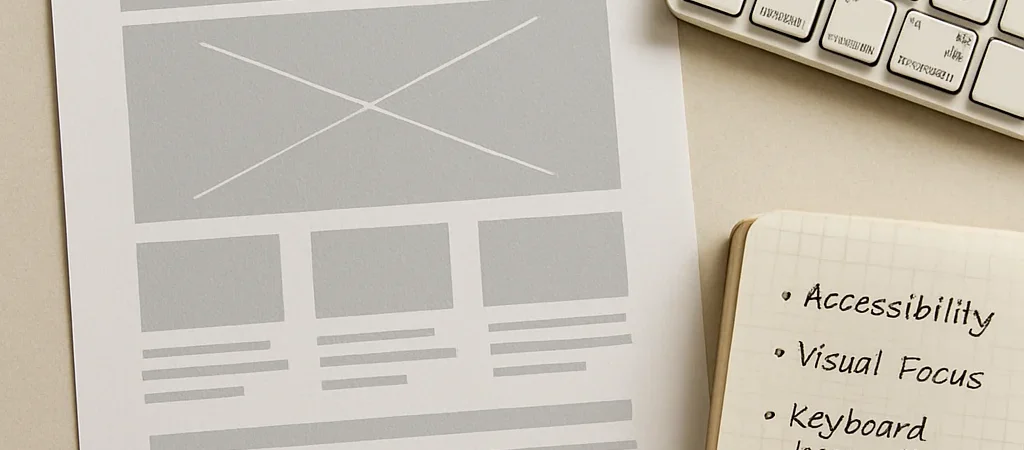
Accessibility is often discussed as a set of things to check before a website goes live. Checks matter, but they are not the whole practice. My thinking comes from a long career, the history behind the work, and the need to pay attention to current research and real experiences.
Understand how guidance develops
A recommendation has a context: what problem it addresses, who it is meant to help, and how our understanding may have changed. Looking back can explain why a practice exists rather than leaving it as a rule to memorize. That history can make guidance easier to apply thoughtfully.
Connect principles to decisions
In UX work, accessibility shows up in choices such as page structure, link wording, keyboard behavior, and whether information remains understandable when visual styling is absent. Small decisions accumulate into a person's experience of a site. Good guidance should help people reason through those decisions, not simply hand them a checklist.
Keep learning in view
The Accessibility section will bring together people, tools, and guides, with room for historical perspective and current research. I want to be clear about the difference between established guidance, my own reflection, and questions that deserve further investigation. Readers should be able to follow the reasoning and decide what to explore next.